Rahnuma-Family Planning Association of Pakistan (Rahnuma-FPAP) has a rich history of working on women’s healthcare from the times prior to the birth of Pakistan. Begum Saida Waheed was the female pioneer of Pakistan’s movement and formed All Pakistan Women’s Association in 1949. A young maid of Begum Saida passed away during her fifth pregnancy. The maid’s death due to unintended pregnancy affected her badly. In 1948, she along with other likeminded women, formed a one-room clinic in her garage in Lahore to provide family planning and sexual and reproduction health to young girls and women in particular the vulnerable and most marginalized groups. Begum Saida, at times, had to face communities’ wrath and was stoned for her FP and SRH work. However, undeterred by adversity, she continued to deliver and was able to attract funding in 1953, whereby with Pathfinder funding one room clinics were established in Karachi, Lahore (Pakistan) and Dhaka (Bangladesh, former East Pakistan).
As of today, Rahnuma-FPAP stands as one of the largest and oldest rights-based civil society organizations at the national level, dedicated to reproductive health (RH) and family planning (FP), renowned both nationally and internationally as a leading advocate and service provider in the RH sector. It empowers women through informed choices, maternal health, gender equality, and providing civic spaces to survivors of violence. The organization is committed to alleviating the sufferings of marginalized and vulnerable sections of society through integrated efforts in RH and FP. The Government of Pakistan acknowledges Rahnuma-FPAP’s contributions through its quarterly performance reports issued by the Pakistan Bureau of Statistics under the Planning Division (www.PBS.gov.pak). Besides, it embeds maternal, neonatal, and child health (MNCH) and nutrition services within its service delivery network and community-based structures. Additionally, it expanded into immunization services in 2025, reaching under-immunized and zero-dose children, and young girls in underserved and marginalized areas for building healthier futures.
In 2023, Rahnuma-FPAP revised its Strategic Plan for 2023-28 to address new challenges in the population sector, including the impact of National Devolution of 2011, the adoption of the Sustainable Development Goals (SDGs) 2016-2030, and FP 2030 Commitments.
All people in Pakistan are empowered to make choices about their SRH and wellbeing in a world without discrimination.
- To lead a movement for SRHR and FP as basic human rights in Pakistan.
- To provide sustainable and quality SH and RH, including FP information and services, particularly to the vulnerable and underserved, in partnership with the government and other stakeholders.
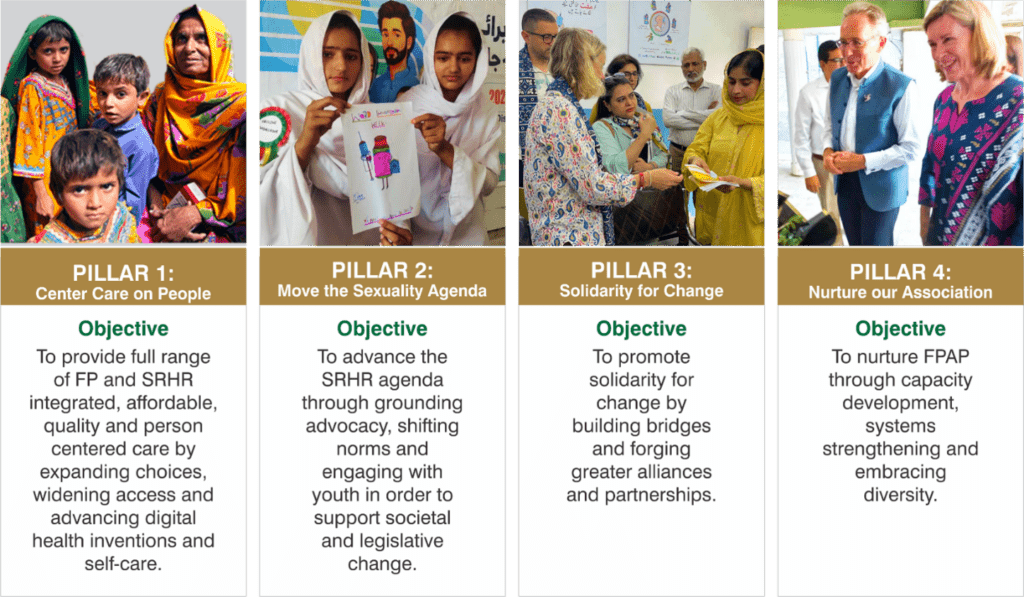
Strategic Pillars
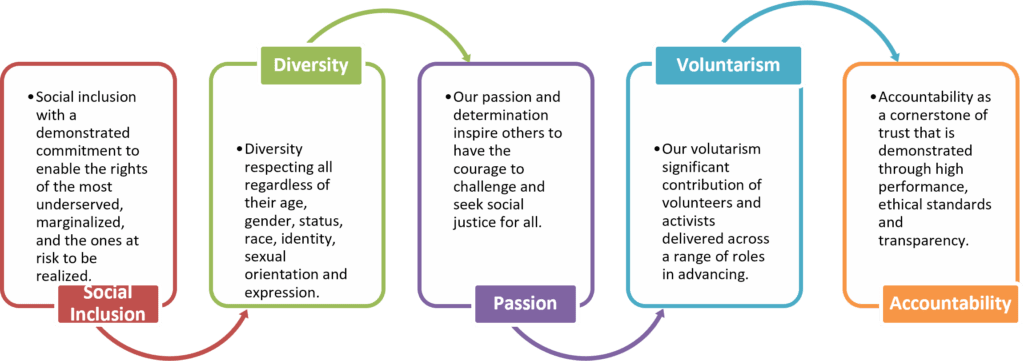
Core Values
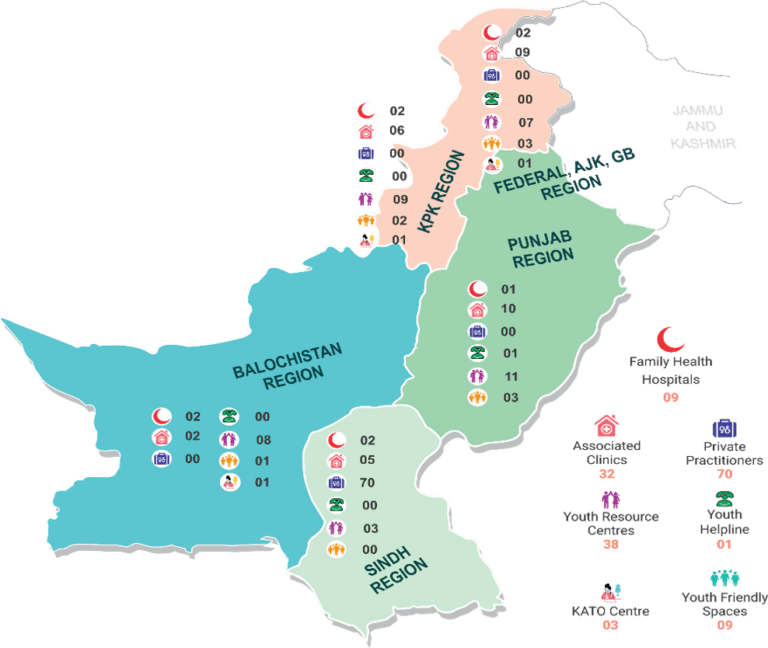
Geographical Presence and Service Delivery Network:
Rahnuma-FPAP’s operational apparatus includes a head office in Lahore, five Regional Management Units in provincial and federal capitals, and 14 program management offices across key cities including Islamabad, Gilgit, Muzaffarabad, Karachi, Badin, Quetta, Turbat, Lahore, Faisalabad, Chakwal, Muzaffargarh, Peshawar, Haripur, Mardan and Kohat. It delivers high-quality, integrated FP and SRH information and services through its vast service delivery network across Pakistan:
Key Thematic Areas:
Rahnuma-FPAP’s implements rights-based, equity oriented, and people-centered programs across following key thematic areas:
- Population Agenda & Population Management: Rahnuma-FPAP) is committed to advancing Pakistan’s population agenda through rights-based, evidence-informed, and sustainable population management approaches. By engaging with government institutions, civil society, and development partners, it contributes to policy dialogue, generates evidence to inform decision-making, strengthens institutional capacities, and implements community-based interventions that support balanced population growth, improved health outcomes, gender equality, and enhanced socio-economic well-being.
- Family Planning (FP) and Sexual and Reproductive Health (SRH):
For decades, Rahnuma-FPAP has worked to improve FP and SRH services for women, girls, underserved, and marginalized population across Pakistan. It combines service delivery with community engagement to empower women and communities to make informed decisions, shift harmful norms, break barriers and increase uptake of FP and SRH services. Rahnuma-FPAP has a pool of Master Trainers on the Minimum Integrated Service Package (MISP) for SRH in emergencies, cervical cancer, and FP/SRH. The organization has also introduced innovative self-care and digital health interventions as part of its COVID-19 response, enhancing access to FP and SRH services. - Maternal, Newborn, and Child Health (MNCH): Rahnuma-FPAP embeds maternal, neonatal, and child health (MNCH) services within its service delivery network and community-based structures. Pregnant and lactating women are counselled on breastfeeding practices for optimal childhood development during the first 1,000 days. Recognizing the critical link between nutrition, maternal well-being and child health, Rahnuma-FPAP integrates nutrition interventions within its (MNCH) programs.
- Humanitarian Assistance: Since Pakistan is prone to both natural and climate change disasters like floods, droughts, heat waves, landslides, cyclones, and earthquakes, among others, Rahnuma-FPAP plays a leading role in shaping humanitarian assistance efforts across Pakistan. During climate change disasters, the organization extends it reach beyond its permanent service locations to deliver quality integrated Sexual and Reproductive Health (SRH), Family Planning (FP), Maternal, Newborn and Child Health (MNCH), Gender-Based Violence (GBV) prevention and response, and psychosocial services in hard-to-reach and disaster-affected areas. It also provides dignity kits, clean delivery kits, referral services and raises awareness around well-informed choices, maternal health, and mental health to create a positive impact on the environment.
- Sexual and Gender-Based Violence (SGBV): Rahnuma-FPAP has decades of experience of working on gender-based violence programming in both development and humanitarian settings. The interventions include providing psychosocial counseling, reproductive health and lifesaving MISP, maternal health care services to survivors, empowering survivors through economic rehabilitation programs, engaging with communities on combating GBV, creating women friendly spaces to provide civic spaces to survivors, referral services and advocacy initiatives at district, provincial and national levels. Rahnuma-FPAP applies Listen, Inquire, Validate, Enhance Safety, and Support (LIVES) approach while providing different services to survivors. It has also trained both management staff and private/public service providers on SGBV fundamentals and collaborates with government-managed shelter homes to improve survivor care.
- Adolescents and Young People: Rahnuma-FPAP With over 64% of the population under 30, the organization equips adolescents and young people in Pakistan with the knowledge, skills, and access needed to exercise their Sexual and Reproductive Health and Rights (SRHR) through a combination of education, service delivery, and policy advocacy. Since 2009, Youth-Friendly Services have been operating across system offering confidential, youth-centered healthcare in partnership with government ministries and global organizations. Rahnuma-FPAP leads the National Task Force on Life Skills-Based Education (LSBE), and serves as a hub for training youth facilitators across Pakistan. The organization’s Master Trainers conduct extensive youth-related training, focusing on life skills, SRHR, and rights awareness. The program ensures inclusivity, privacy, and youth protection, making it a cornerstone of adolescent health and empowerment in Pakistan.
- Gender Equality and Women’s Empowerment: The organization operates three training centers, called Kato centers, located in Haripur, Quetta, and Azad Jammu and Kashmir (AJK). These centers provide vocational and technical skills including courses in beautician work, stitching, embroidery, handicrafts, and knitting, etc., for women and young girls from underserved and marginalized communities. The initiative also connects trainees with local market vendors, aiming to foster economic independence and sustainable livelihoods.
- Immunization: Rahnuma-FPAP prioritizes investing in the bright future of the children through preventive healthcare opportunities including routine immunization and HPV awareness. It promotes immunization coverage among zero-dose and under-immunized children through innovative, community centered approaches. By combining accessible immunization sites with culturally resonant engagement strategies, Rahnuma-FPAP removes barriers to vaccination, while enhancing awareness for Human Papillomavirus (HPV) to prevent cervical cancer.
Policy and Advocacy: Rahnuma-FPAP contributes to national and provincial advocacy efforts. It plays a key role in initiatives such as, the FP2030 framework, Advocacy for the Child Marriage Restraint Act in Punjab KP and Balochistan, promotion of the Pre-Marital Counselling Bill in Gilgit Baltistan (GB) and AJK, and support for the right to ‘Promotive and Primary Health Care Bill’. It also advocates for integration of SRHR into national youth policies, include Comprehensive Sexuality Education (CSE) in school curricula. Rahnuma-FPAP has also played an important role in advocating for integration of MISP approach and SRH into national and provincial emergency preparedness plans and humanitarian responses through a series of consultative sessions with NDMA and PDMAs.
Cross-Cutting Themes:
- Nutrition & Wellbeing
- WASH
- Community Engagement
- Disability Inclusion
- Strengthening Alliances & Partnerships
- Research & Capacity Building
- Innovation & Sustainable Development
Target Beneficiaries:
- Women and Girls
- Adolescents and Young People
- Children
- Survivors of violence
- Afghan Refugees and Host Communities
- Internally Displaced Population
- Flood-affected population
- Persons with disability
Organizational Structure and Management:
The structure of the organization is comprised of two major pillars: governance and management. The Governance of the organization is democratic and vests in its volunteerism. It is led by the Board of Governance, a Regional Coordinating Committee in each region of Punjab, Khyber Pakhtunkhwa, Sindh, Balochistan and Federal Region of Islamabad, Gilgit-Baltistan and Azad Jammu and Kashmir. The executive and management body of the governance structure is comprised of professional management team led by the Chief Executive Officer (CEO) – based in Head Office Lahore. The CEO oversees all the staff at Head Office, Regional Management Units, and Program Management Offices staff, whereby, Director Program Management Division and Other Donor Projects, Director Monitoring Evaluation and Research, Director Finance and Budget, Director Administration, Director Internal Audit, Manager Human Resource based at Head Office, and all the regional directors directly report to the CEO. The Regional directors and head office team is supported by experienced program managers, program officers, program associates and dedicated field teams.
The HO management team provides regular support to the Regions, conducts quarterly review meetings under the CEO chair and pay monitoring visits for ensuring quality and timely implementation of the program activities to achieve set objectives. Apart from well-equipped Governance and Management teams, Rahnuma-FPAP also maintains a robust pool of technical professionals including medical specialists, general practitioners, lady health visitors, dispensers, lab technicians, medical attendants, social mobilizers, trainers, and master trainers—ensuring quality service delivery and technical excellence across all project sites. The total staff strength of the organization in 523.
Collaboration with Public/ Private/ Development Partners:
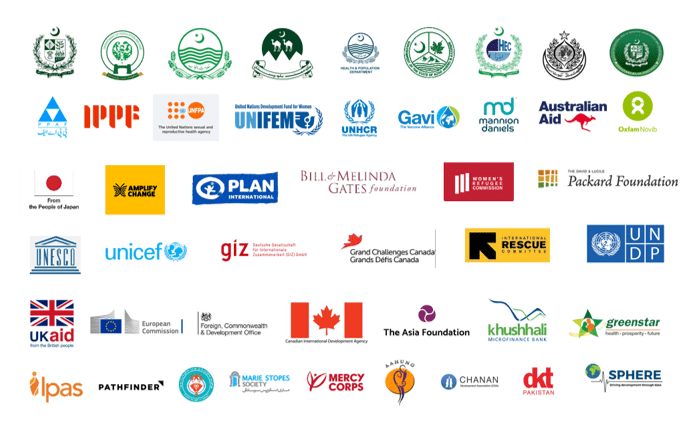
Rahnuma-FPAP maintains extensive partnerships with local and national CSOs, NGOs, and multilateral networks across Pakistan. The organization partners with UN agencies including UNFPA, UNDP, UNICEF, UN Women, UNAIDS, and UNHCR, IPPF, Ipas, Gavi, FCDO, DFAT, USAID, Women Refugee Commission, Japan Supplementary Fund, Plan International, Care International, and AusAid. Nationally, Rahnuma-FPAP collaborates closely with the Ministry of National Health Services, Regulations, and Coordination (MNHSRC), Government of Pakistan, Federal Ministry of Economic Affairs, Ministry of Planning, Development and Reforms, National Institute of Population Studies (NIPS), Health services academy (HSA) and Population Association of Pakistan (PAP). It serves as the CSO Co-Focal for the Country Engagement Working Group (CEWG) on FP 2030 under MNHSRC. Rahnuma-FPAP also maintains strong linkages with government institutions including NDMA/PDMA/DDMA, Department of Health and Population Welfare, Department of Education, Directorate of Youth Affairs, Balochistan Commission on the Status of Women, and Commissionerate for Afghan Refugees (CAR), Balochistan AIDS Control Program, the Trade Testing Board (TTB), and Balochistan Rural Support Programme.
It also has experience of working with Pakistan Army, Pakistan Air Force, City Government Lahore, Pakistan Railways, Government of AJK, Northern Areas Health Department, Cantonment Boards of POF, Wah and Heavy Rebuild Factory, Texila. To promote service delivery, organization also strengthened women empowerment and youth empowerment programs with the provision of micro credits in collaboration with Khushhali Bank. The organization also maintains strong strategic partnerships with Mercy Corps, Islamic Relief, Basit Diagnostic Centre (BDC), and TG’s – enhancing its advocacy efforts.
At the civil society level, Rahnuma-FPAP actively collaborates with organizations including Greenstar Social Marketing, Marie Stopes Pakistan, Population Council Pakistan, Jhpiego, Pathfinder, DKT, MSS, Rozan, Chanan Development Association, Aahung, Shirkat Gah Women Resource Centre, Youth Employability Network, SPHERE Consultants and Aman Foundation, alongside a 150+ member Provincial CSO Coalition under the FP2030 framework. These linkages collectively strengthen local ownership, expand service reach, and ensure coordinated civil society voices in national policy processes.
Alliances and Partnerships:
Rahnuma-FPAP is a part of various alliances and technical memberships including:
- National and Provincial Reproductive Health Working Groups
- National and Provincial CSOs and Youth FP2030 working group
- Midwifery Technical working Group
- National CSOs coalition
- Alliance Against Child Marriage
- LSBE Alliance
- Pakistan Alliance for Post Abortion Care (PAPAC)
- Country Engagement Working Group
- Prime Minister’s SC/CCI Task Force
- Technical Working Group-EPI Punjab
- EPI Steering committee-Punjab
- CSO’s Punjab Forum
- SDGs Task Force
It also engages Parliamentarians (Parliamentary Caucus) and Media (Media Network) to advance its legislative and advocacy agenda. These alliances and memberships are built to enhance coordination, resource mobilization, and localization efforts for sustainable improvement in health outcomes.
Awards and Achievements:
The FPAP’s work has always been recognized nationally and internationally and organization has received a number of awards including:
- Global 500 Award of the Earth Summit 1992
- Common Wealth Youth Service Award 1996 for promotion of small family norm amongst the newly weds
- Common Wealth Award of Excellence 1997 for Girl Child Program
- Common Wealth Service Award UK to FPAP’s Community Institution Project Faisalabad for its holistic and integrated family planning and reproductive health approach at grassroots 1997
- Common Youth Services Award 1998 for Self-Employment Scheme for Youth and Service Delivery
Performance Excellence Award by the Government of Pakistan (2009)
Research/Studies:
Research always provides a basis for initiation and implementation of effective and innovative programs and this strategy has been regularly used by the organization to measure the progress and direction of its programs. Since its inception in 1953, Rahnuma-FPAP has conducted 150 studies including KAP surveys to evaluate programs and find solutions to the existing problems related to family planning and reproductive health for new programs. These researches/studies are held in house and with support from outside consultants/agencies.
Rahnuma-FPAP Policies:
Rahnuma-FPAP is committed to upholding ethical behaviours, values, and principles, while ensuring safety and confidentiality of both its beneficiaries and staff through following policies in place:
- Employee Grievance Policy
- Sexual Harassment Policy
- Policy on Whistle-Blowing/ Raise a Concern
- Safeguarding (Children and Vulnerable Adults)
- Policy on Protection of Children
- Protection from Sexual Exploitation, Abuse, and Harassment
- Gender Equality Policy
- Gender Equity Policy
- Anti-Fraud Policy
No Refusal Policy:
Rahnuma-FPAP has a ‘No Refusal Policy’, whereby anyone who is unable to pay for the already subsidized service charges, is served after due diligence without or at subsidized rates.
Accountability, Financial Management and Transparency:
Rahnuma-FPAP maintains bank account with mandate of dual signature on each cheque to ensure transparency. All transactions are processed through bank transfers or cheques. The organization’s accounts are audited annually by international affiliation-chartered accountancy firm and audit findings are presented to BOG members for discussion and future course of action. Audit reports are shared with donors and the public through Rahnuma-FPAP’s Annual Reports.
A System of Internal Control is in place and is reviewed on a regular basis, covering areas such as activity audits, procurement, vehicle running costs, the sustainability fund, travel and daily allowances, physical verification of assets, legal cases, supplier evaluation and enlistment, and reporting formats. In addition to the annual statutory audit conducted by an internationally recognized audit firm, individual donor-funded projects are subject to project-specific audits as set out in respective project plans.
Our Partners:
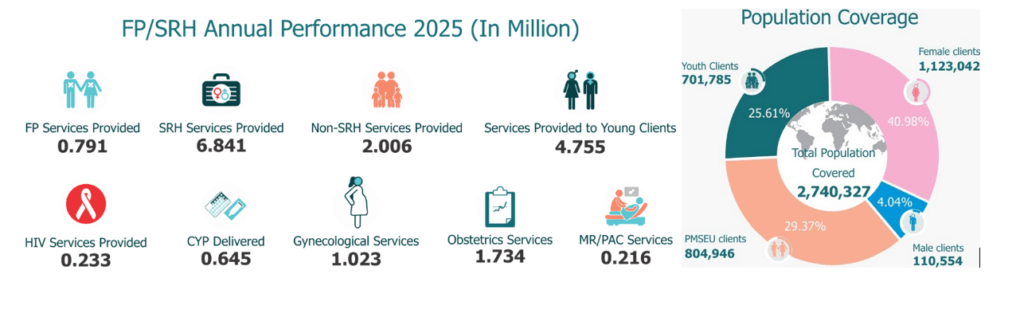
Annual Performance (2025):
Beneficiaries Reached (2021-2025):
| Beneficiary | Numbers |
| Female clients | 23,170,526 |
| Youth Clients | 10,687,451 |
| Clients served in humanitarian context | 55,408 |
| PMSEU Clients | 15,290,150 |
| Disabled Clients | 6,773 |
| Survivors of violence | 242,040 |
Registration and Authorization:
Rahnuma-FPAP is registered and authorized by:
Contact Information:
| Organization | Rahnuma – Family Planning Association of Pakistan (Rahnuma-FPAP) |
| Head Office | 3-A Temple Road, 54000, Lahore, Pakistan |
| Telephone | +92 (42) 111 22 33 66 |
| Fax | +92 (42) 3636 8692 |
| info@fpapak.org | |
| Toll-Free Helpline | 080044488 |
| Website | www.fpapak.org |